
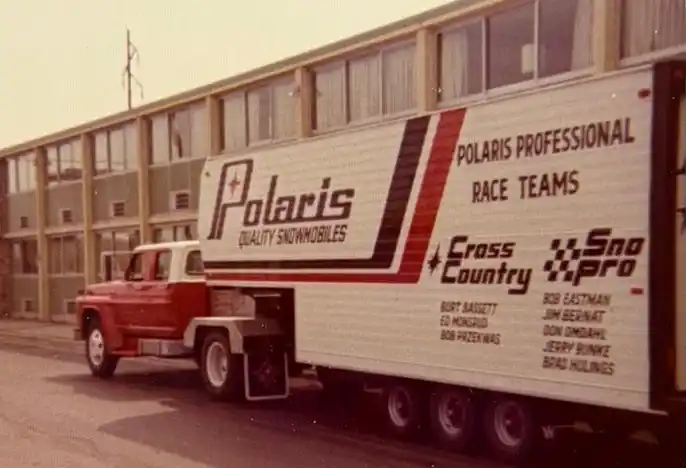
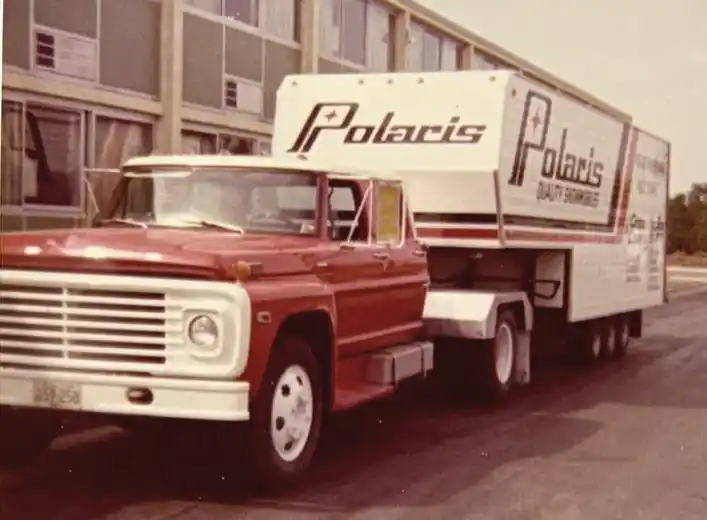
Some fascinating new photos recently surfaced on Facebook showing the truck and trailer used by the Polaris factory cross-country racing team during the glory days of Polaris racing.
At first glance, it’s exactly what you might expect from a factory racing operation: a dedicated transporter, a well-equipped race trailer, factory tools and the resources of Polaris behind the racers.
But the story behind the cross-country team was quite a bit different.
The Cross-Country Racers Still Had Day Jobs
Polaris approached its cross-country racing program very differently from the factory oval racing operation.
The cross-country racers weren’t spending their days in a dedicated race shop preparing snowmobiles while everyone else was at work. They were Polaris employees, and they were expected to put in a full day’s work at the plant.
Only after the workday was finished could they turn their attention to preparing their race sleds.
In that respect, their lives weren’t all that different from the independent racers they competed against every weekend.
They worked all day, then worked on race sleds at night.
But They Did Have the Polaris Factory Behind Them
There was, of course, one very important difference between being an independent racer and racing cross-country for Polaris.
The Polaris racers had access to factory tools, equipment, engineering knowledge and parts. And when it was time to go racing, they had something most independent racers could only dream about: a properly equipped factory race trailer.
These newly surfaced photos give us a rare look at that part of the operation.
The truck and trailer weren’t simply transportation for the snowmobiles. The trailer served as a mobile race shop, carrying the tools, parts and equipment the team needed once they arrived at an event.
For racers accustomed to working out of pickups, enclosed trailers and whatever space they could find, the Polaris setup was a considerable advantage.
Factory Racing, Cross-Country Style
It’s tempting today to lump all of the Polaris factory racers together, but the oval and cross-country programs operated in very different worlds.
 The oval racing effort involved highly specialized racing machines and a dedicated factory racing operation. Cross-country racing retained much more of the character that had defined the sport from the beginning: riders preparing machines after work and then heading out to prove themselves over hundreds of miles of some of the toughest terrain winter could provide.
The Polaris cross-country racers happened to have a factory logo on their jackets and a very impressive truck and trailer waiting for them.
But they still had to punch the clock first.
A Rare Look Behind the Polaris Cross-Country Team
That’s what makes these photos particularly interesting.
We’ve seen countless photographs of Polaris race sleds and the legendary racers who rode them. Photographs of the infrastructure behind those racers are much less common.
The truck, the trailer, the tools and the equipment tell another part of the story. They show how Polaris supported its cross-country racers while still expecting them to live much like the racers they competed against: work during the day, prepare the snowmobile at night, and go racing on the weekend.
For anyone interested in the history of Polaris racing, these newly discovered photos provide another small window into what factory cross-country racing actually looked like behind the scenes.
