There are restorations, and then there are restorations where the guy doing the work happens to be the guy who raced the thing in the first place.
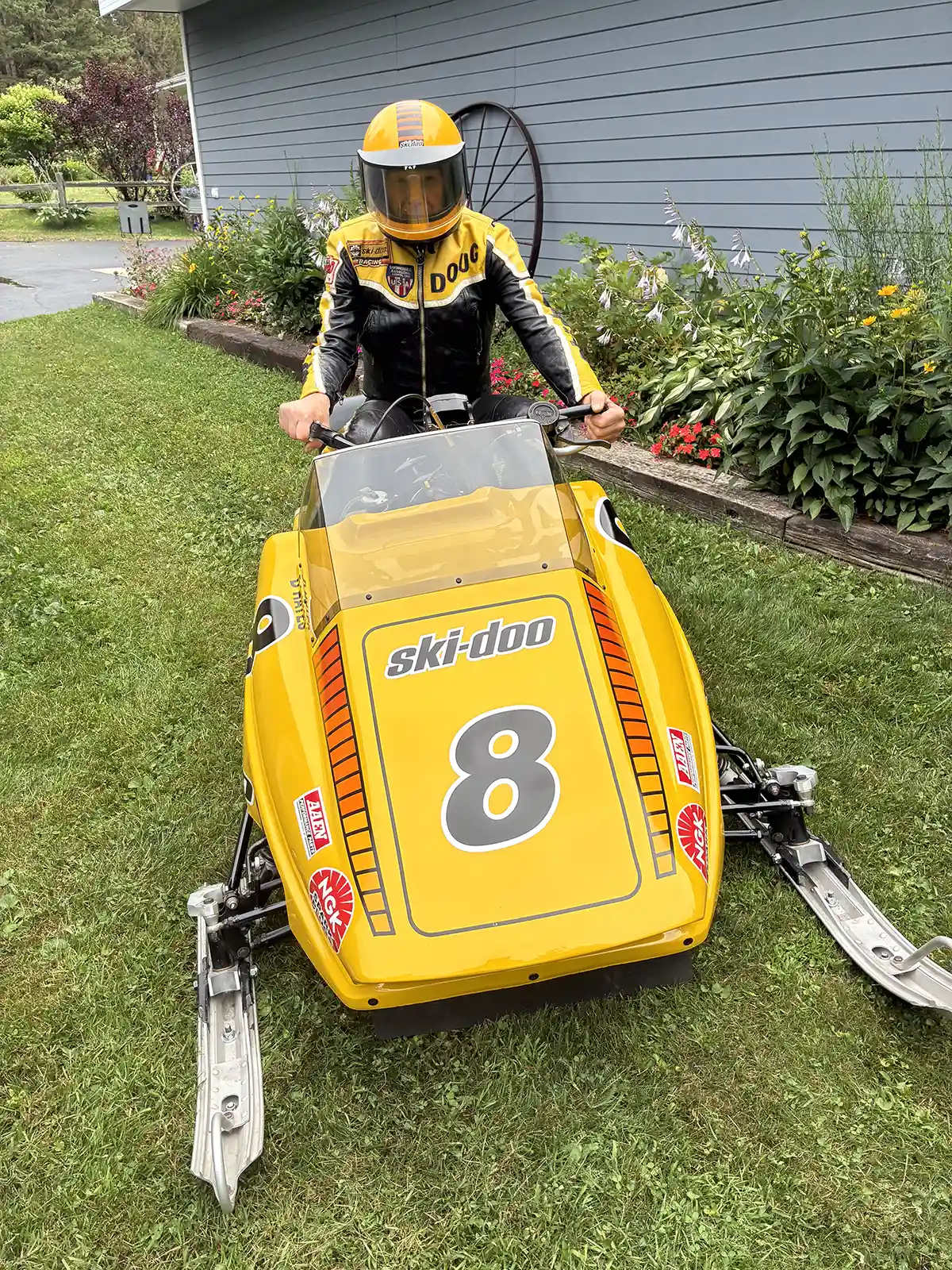
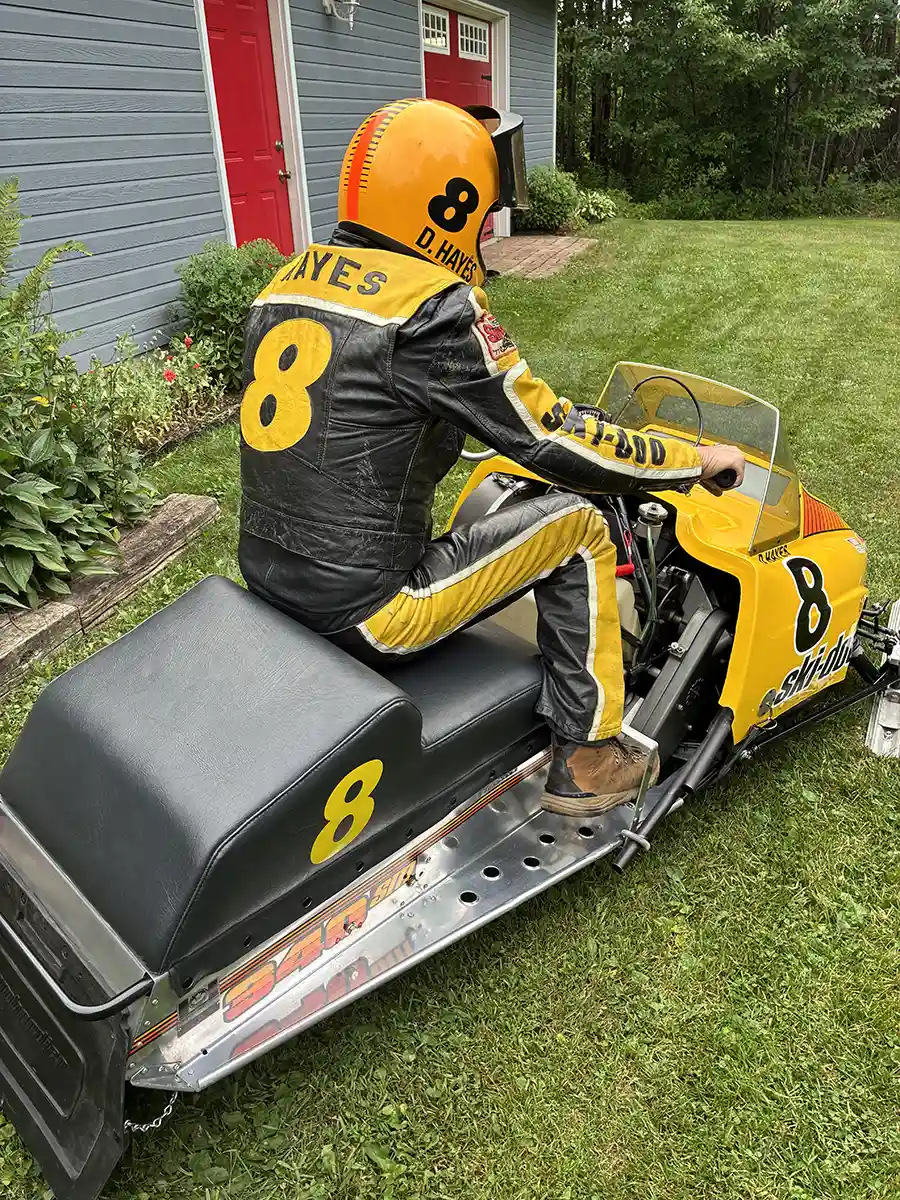
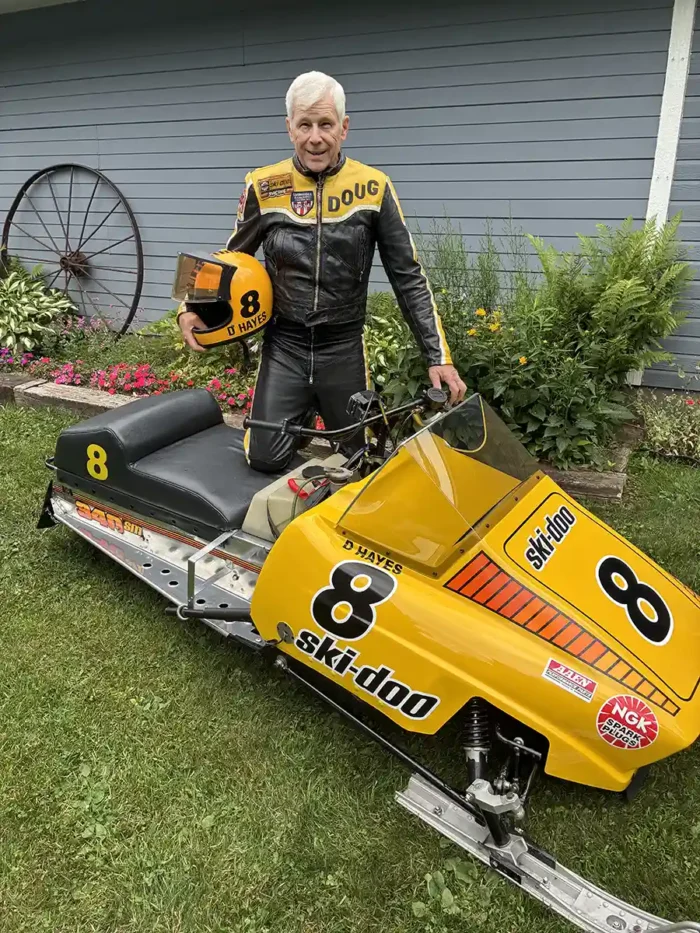
Snowmobile Hall of Famer Doug Hayes has completed a nearly decade-long restoration of his 1978 Ski-Doo factory 340cc SnoPro racer. And he didn’t simply make it look like the sled he raced in 1978. He brought it back remarkably close to the way it actually setup to race.
That distinction matters.
Doug has been involved with some of the most important racing programs and machines in snowmobile history. He raced Ski-Doo, Mercury and, most importantly to our story, Polaris. He was part of the Larson-Olson Polaris team that won the 1972 Soo 500, and later played a major role in developing the Mercury Sno-Twisters. Those machines helped racers such as Steve Thorsen and Brad Hulings attract the attention of Polaris.
Because of his history and general good-guy status, Doug Hayes is officially one of the Starfire Kids. That is why this story is on the website otherwise dedicated to hardcore Polaris fans.
Doug was very close to having been part of the Polaris effort going into the 1977 season, except he still had a contract with Ski-Doo to fulfill. He eventually made it back to Polaris for 1979, racing a very special RXL prepared at Polaris and powered by an outrageously strong Rotax built by Dick Bahr.
But the machine we’re talking about today is one of them yellow ones.
Not Just Restored: This is Race Ready.
Doug’s 1978 Ski-Doo is unusual even among beautifully restored factory racers, because it has been returned to essentially race-ready condition.
It isn’t tuned right to the absolute bleeding edge of what the machine could do in 1978. Doug backed it off just enough that a mere mortal can climb aboard, experience something remarkably close to the real thing, and have a reasonable expectation of still being able to walk away afterward.
The sled has the exotic materials you’d expect from a factory SnoPro machine: Magnesium, titanium, lightweight aluminum and fiberglass, all used in the relentless pursuit of less weight and more speed.
Even the original lightweight component hanging on to the handlebars has survived: Somehow, nearly 50 years later, Doug still fits into his original 1978 racing leathers. This may actually be the most technically impressive part of the restoration!
One of Ski-Doo’s Best-Looking Race Sleds
I think the 1978 Ski-Doo factory racer is one of the best-looking snowmobiles ever to come out of Valcourt.
There is an interesting story behind the man responsible for that lineage of Ski-Doo design.
In 1966, Sam LaPointe was working as an interior decorator and designing the home of a Bombardier executive. Sam made the mistake, or perhaps the very fortunate decision, of telling him that he didn’t particularly like the way Ski-Doos looked.
The executive’s response was essentially, “Okay, then you design one!”
So he did. LaPointe eventually went to work for Ski-Doo and became the design genius behind machines whose influence can clearly be seen in this 1978 racer. The long, low wedge, the canopy-like windshield and the aggressive nose give the machine the appearance of an American fighter jet that somehow acquired a track and skis.
Nearly half a century later, it still looks fast, as well as being as potentially lethal to a competitor as one of those fighter jets – even when it’s sitting still.
The Carbon-Fiber Hood That Almost Happened
Doug tried to make it even lighter.
He pushed Ski-Doo to use carbon-fiber hoods on the factory racers. They weighed almost nothing and were extremely difficult to destroy, which sounds like a perfect combination for a racing snowmobile.
Ski-Doo investigated it and came back with an answer that probably made perfect financial sense in 1978.
“For the price of one carbon-fiber hood” Doug was told, “We could supply you with a new lightweight fiberglass hood for every heat, semifinal and final you will race all season!”
Of course, fiberglass won out.
It is an interesting glimpse into factory racing at the time: The goal wasn’t to use the most exotic material possible. The goal was to build the fastest, lightest machine possible within a budget, and sometimes a stack of disposable fiberglass hoods made more sense than just one special one.
The Rotax “Special”
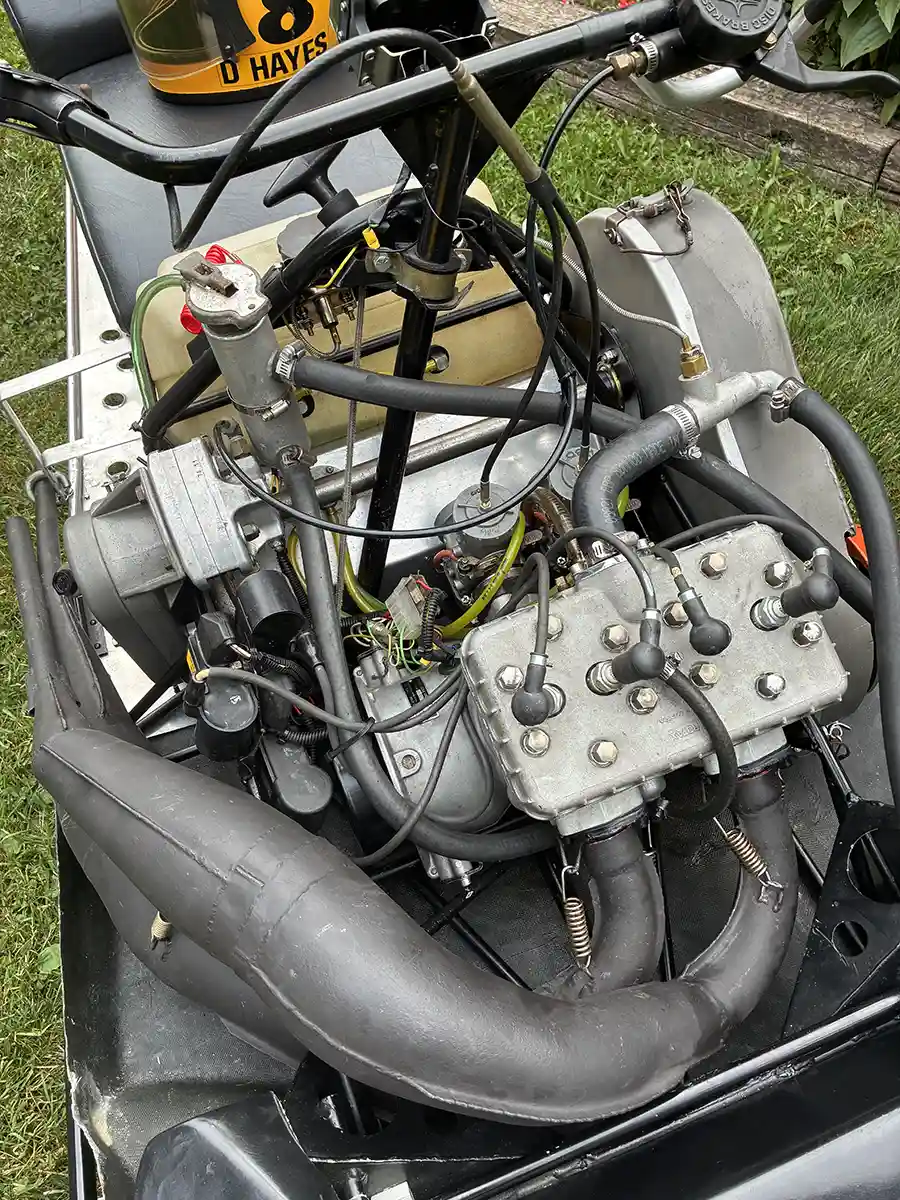 Take the hood off Doug’s 340 and another piece of SnoPro history appears.
One of the first things you’ll notice is the double-plugged cylinder heads, a feature unique to these sleds during the first part of the season.
The factory Rotax engines themselves started out the same engines available to independent racers. There wasn’t a secret factory casting or some unobtainable engine that suddenly made another 20 horsepower.
There was, however, a very special trick up Ski-Doo’s sleeve: Dick Bahr.
Each factory engine was personally gone through, ported and assembled by Bahr. After receiving his attention, the engines became known as the “Specials”.
The difference wasn’t enormous. Dick’s engines produced only a precious few horsepower more than a good production racing engine. But SnoPro racing was a world where a precious few horsepower could make the difference between being first and being the first loser.
Doug also brought some of his own ideas from Mercury.
During his Mercury years, he had become accustomed to Goodyear belts, with Goodyear supplying special belts for his 250, 340 and 440 racers. When Doug moved to Ski-Doo, he stayed with them.
His clutching for the 1978 SnoPros were specifically developed around those Goodyear belts. Rather than treating the belt as simply another replaceable component, the belt and clutch calibration worked together as a system, with each machine set up accordingly.
The Factory Sleds Started as Rejects
Perhaps the best story about these machines is how the factory racers came to exist in the first place.
The first batch of 1978 SnoPro sleds built was intended to become the production race machines sold to independent racers. When that first batch was completed, the race department took a close look at them.
They found problems. Plenty of them.
The issues were identified and corrected, and the updated machines became the examples used to build the production sleds that would ultimately go to independent racers.
So what happened to that original batch?
They weren’t scrapped, and they were not inflicted on the independent racers.
Once repaired, updated and corrected, they went back to the race department. Doug Hayes, Claude Desrosier and Bobby Donahue then had the job of finishing those machines and turning them into Ski-Doo’s 1978 factory race sleds.
In other words, the factory racers weren’t specially constructed first, with production racers following behind them. The earliest machines came down the line destined for customers, revealed what needed fixing, helped establish the corrected production specification, and then became the foundation for the factory team’s own racers.
And today, thanks to Doug and a whole heck of a lot of work, one of those machines is alive again.
Back Where It Belongs
That’s what makes Doug’s restoration particularly special.
This isn’t a replica built from photographs. It isn’t a cosmetically perfect museum piece that happens to resemble a 1978 SnoPro racer. It represents a machine built during one of the wildest periods in snowmobile racing, restored by one of the people who was actually there developing, preparing and racing these things.
Doug spent nearly a decade getting it right.
The magnesium, titanium, aluminum and fiberglass are there. The double-plug heads are there. The Rotax is ready to run. The machine has been brought back remarkably close to its 1978 racing configuration.
And somehow, the original driver still fits in the leathers.
Now somebody just needs to hand Doug his helmet and clear the track.
Looks like the winter of 2026-2027 just got a bit spicier…